GridPrice
Live electricity prices for 33 states, on your home screen.
On hourly pricing, the same load of laundry can cost three times more at dinnertime than at dawn. GridPrice shows the live price, when it will be cheapest, and what things actually cost, so you run the big stuff when power is cheap.
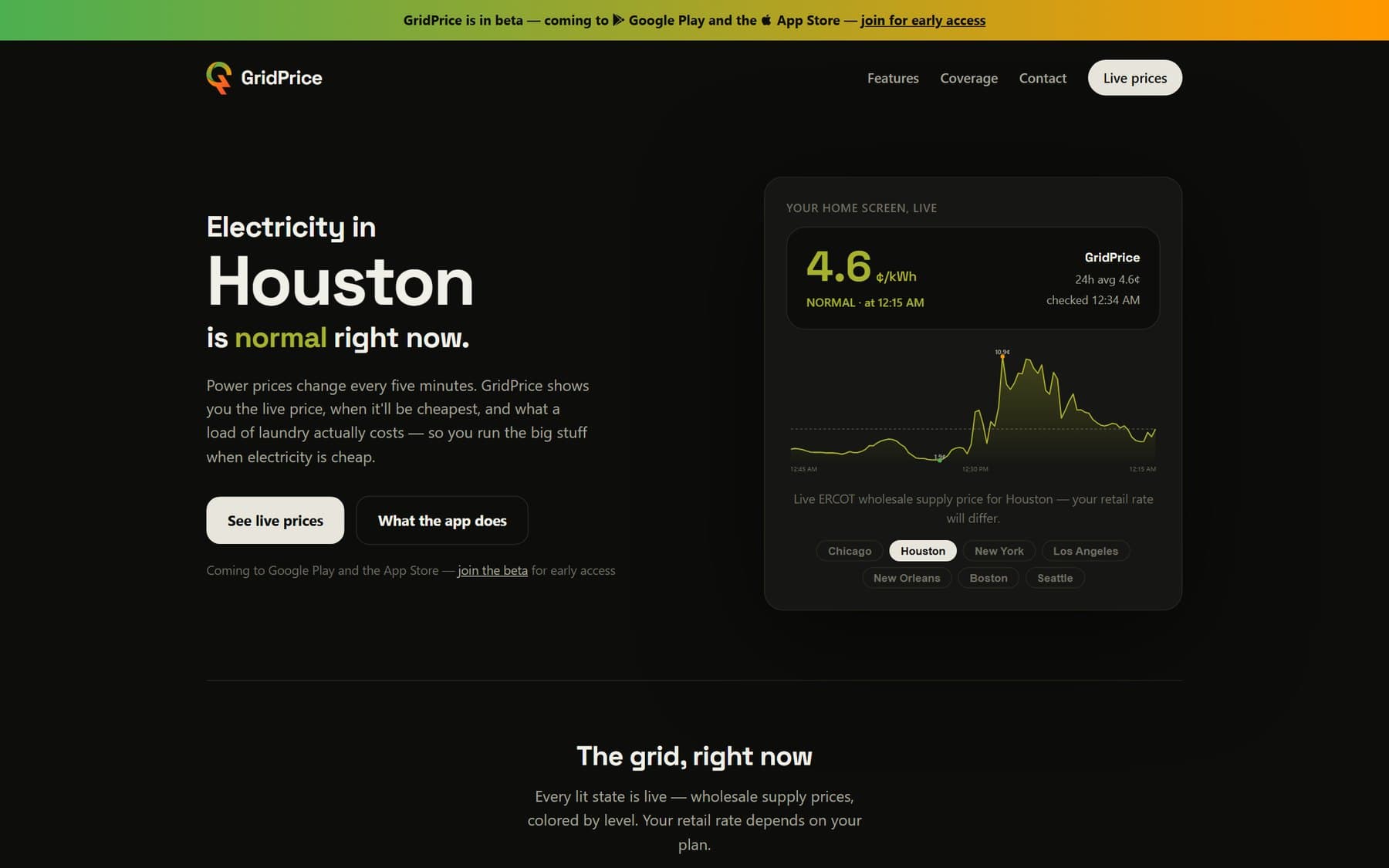
gridprice.app, v2: the live price for your area, right on the home page.
47
utility and grid price feeds
33
states covered, from ComEd to ERCOT
5 min
between price updates, around the clock
Beta
open now, ahead of the Google Play launch
The story
From a tool for one utility to a product for 33 states
GridPrice started as an Android app I built for myself: ComEd’s hourly pricing program changes the price through the day, and it only pays off if you know what the price is right now.
Version 2 turns it into a product. It has its own domain and brand, a website anyone can use without installing anything, a price server that collects every feed in one place, and a rebuilt app that is now in beta.
The process
v1, v2, and what comes next
Each version answered the same question for more people: is now a good time to use a lot of power?
An Android app for one utility
Built for ComEd’s hourly pricing program in northern Illinois: the live price, 24-hour charts, alerts and a home screen widget, written in Kotlin.
- ComEd only
- The phone fetched prices itself
- Retrofit, WorkManager, MPAndroidChart
A product with its own home
A new brand, a website at gridprice.app, a price server behind everything, and a rebuilt app, covering 47 price feeds across 33 states.
- gridprice.app with a live map of the grid
- Central price server and a public API
- Rebuilt app, now in beta
Public launch
The beta is running ahead of the Google Play launch, with the App Store after that. iPhone users who sign up hear first when the App Store beta opens.
- Google Play launch
- Then the App Store
- Beta testers get it first
The grid, right now
LIVELoading live prices…
The website
The whole grid, right now
The home page lights up every state with a live feed, coloured by price level. The map here is live too, pulling the same prices from GridPrice’s API as you read this.
- A live price card for your city on the home page
- A live-prices page for every state and power company
- Coverage broken down by region, from ComEd and Ameren to ERCOT, PJM, MISO, CAISO, NYISO and ISO-NE
The app, rebuilt
Every screen answers one question
Pick your state and power company once, and every screen, alert and widget follows your utility’s live feed. These are the app’s screens as gridprice.app previews them, filled with live prices.
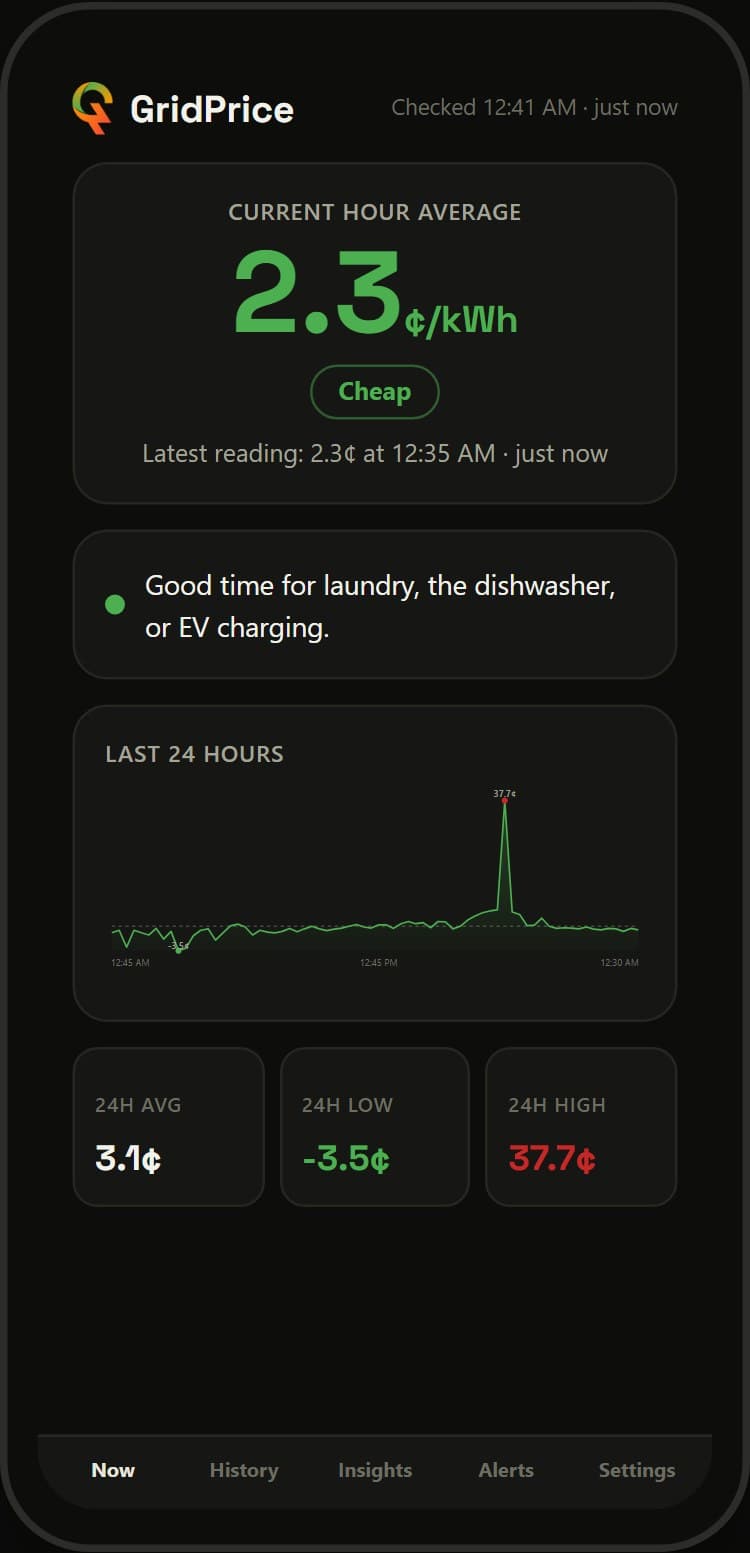
Now
The live price
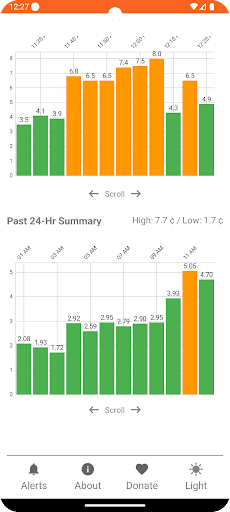
Your utility’s price, colour-coded by level, with advice on whether to run the big stuff and the last 24 hours.
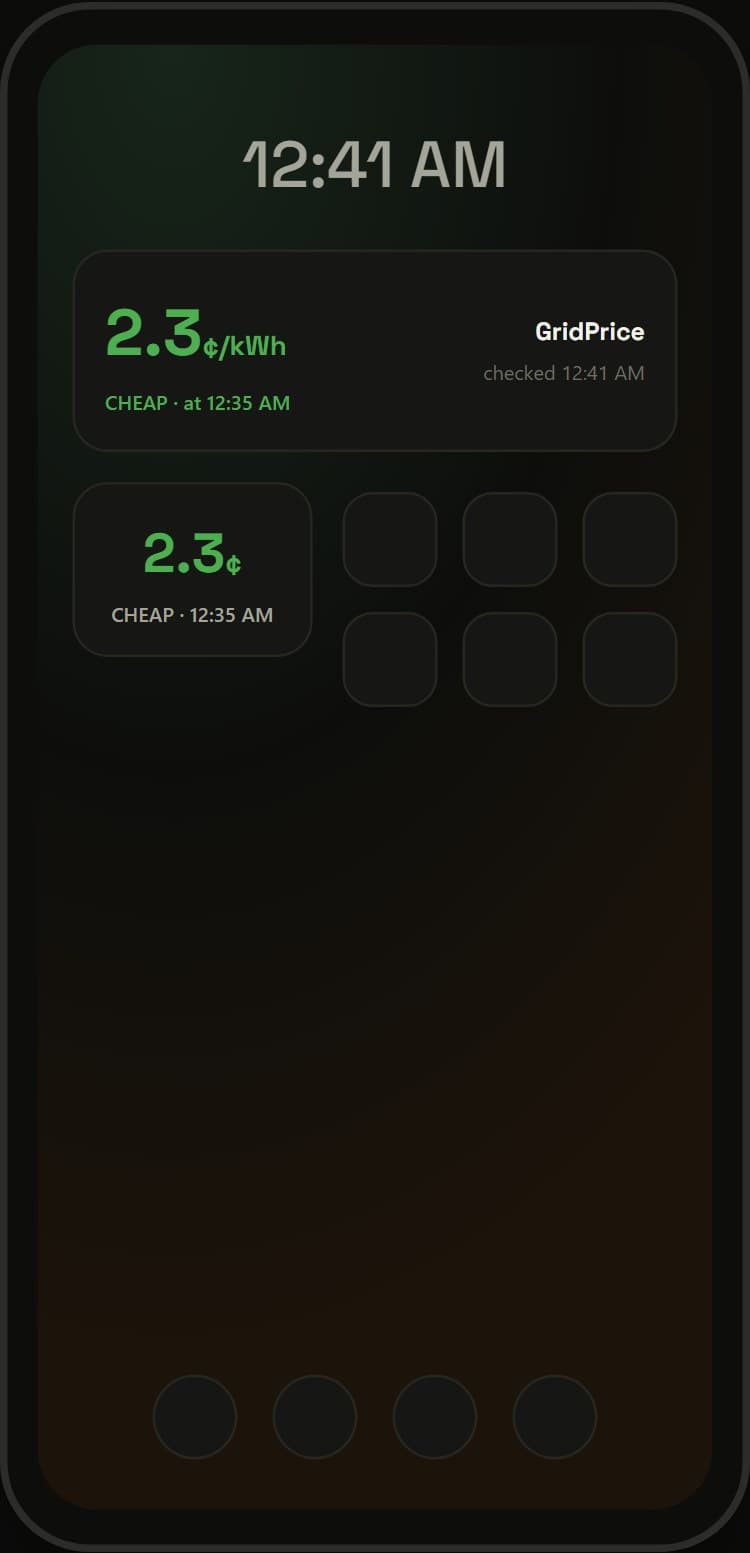
Widgets
Home-screen widget
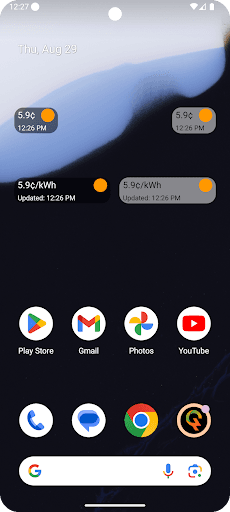
The current price and its reading time in two sizes, refreshed every 5 minutes around the clock.
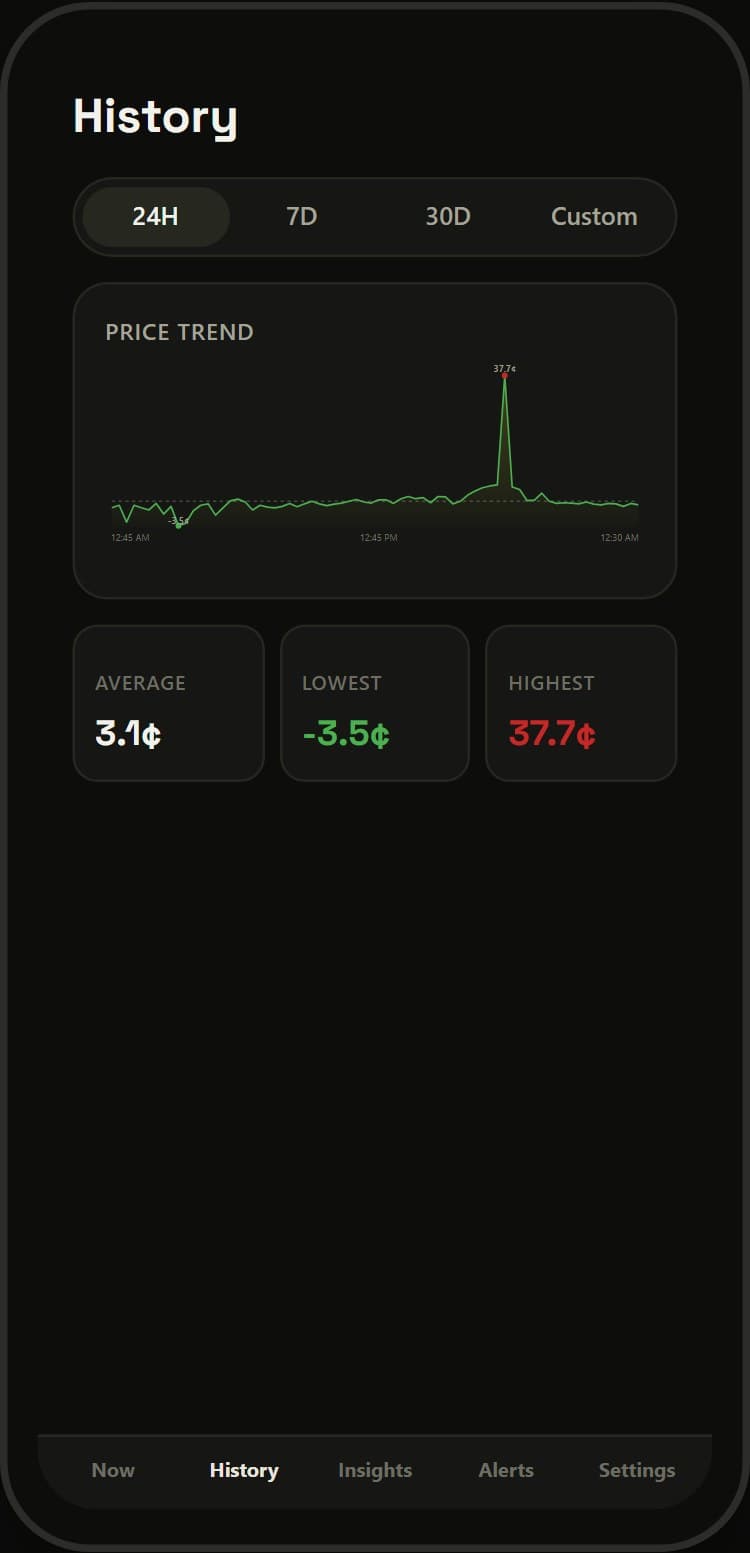
History
History and trends
Charts over 24 hours, 7 days, 30 days or a custom range, with the average, lowest and highest price.
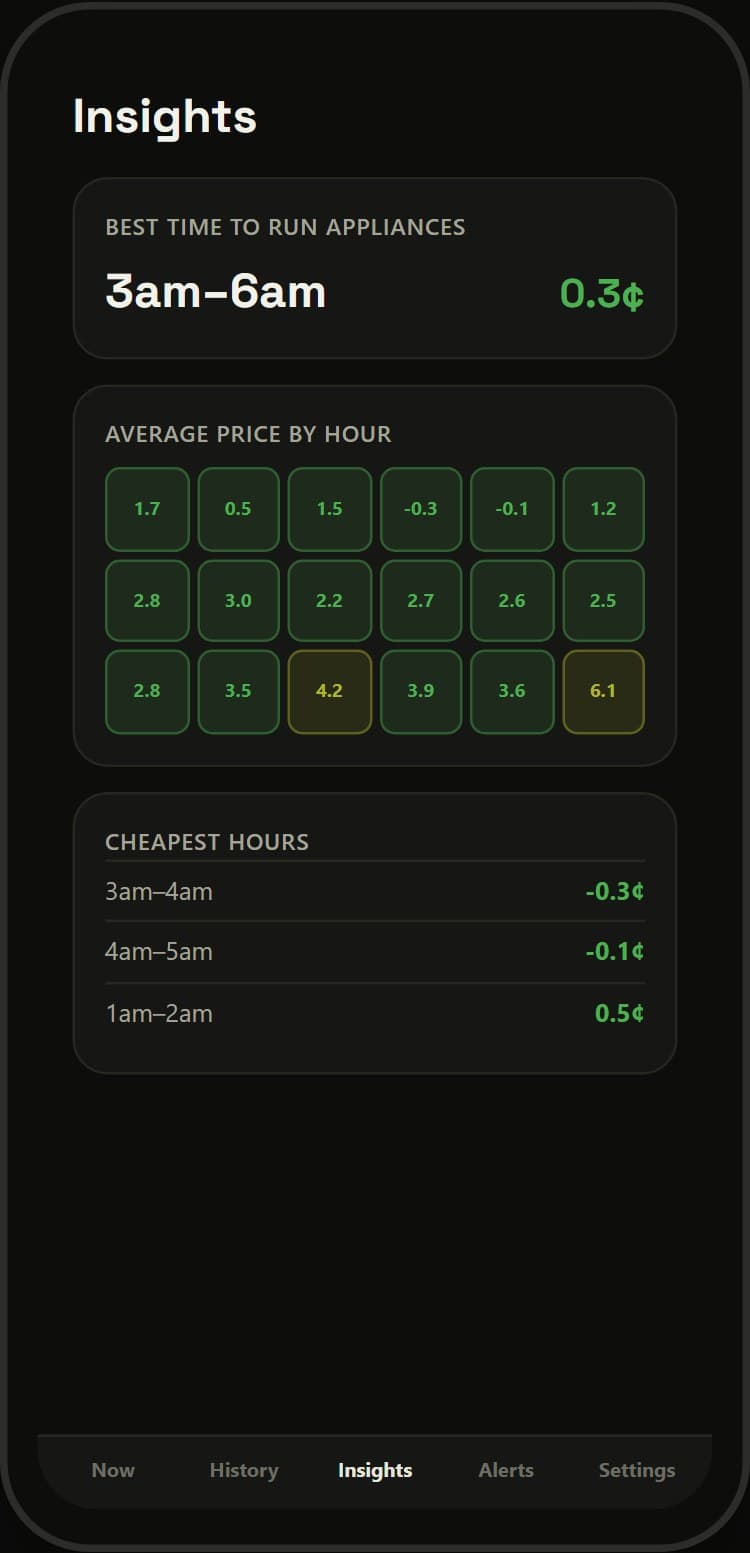
Insights
Cheapest hours
The best 3-hour window for appliances, an average-price-by-hour heatmap, and the cheapest hours ranked.
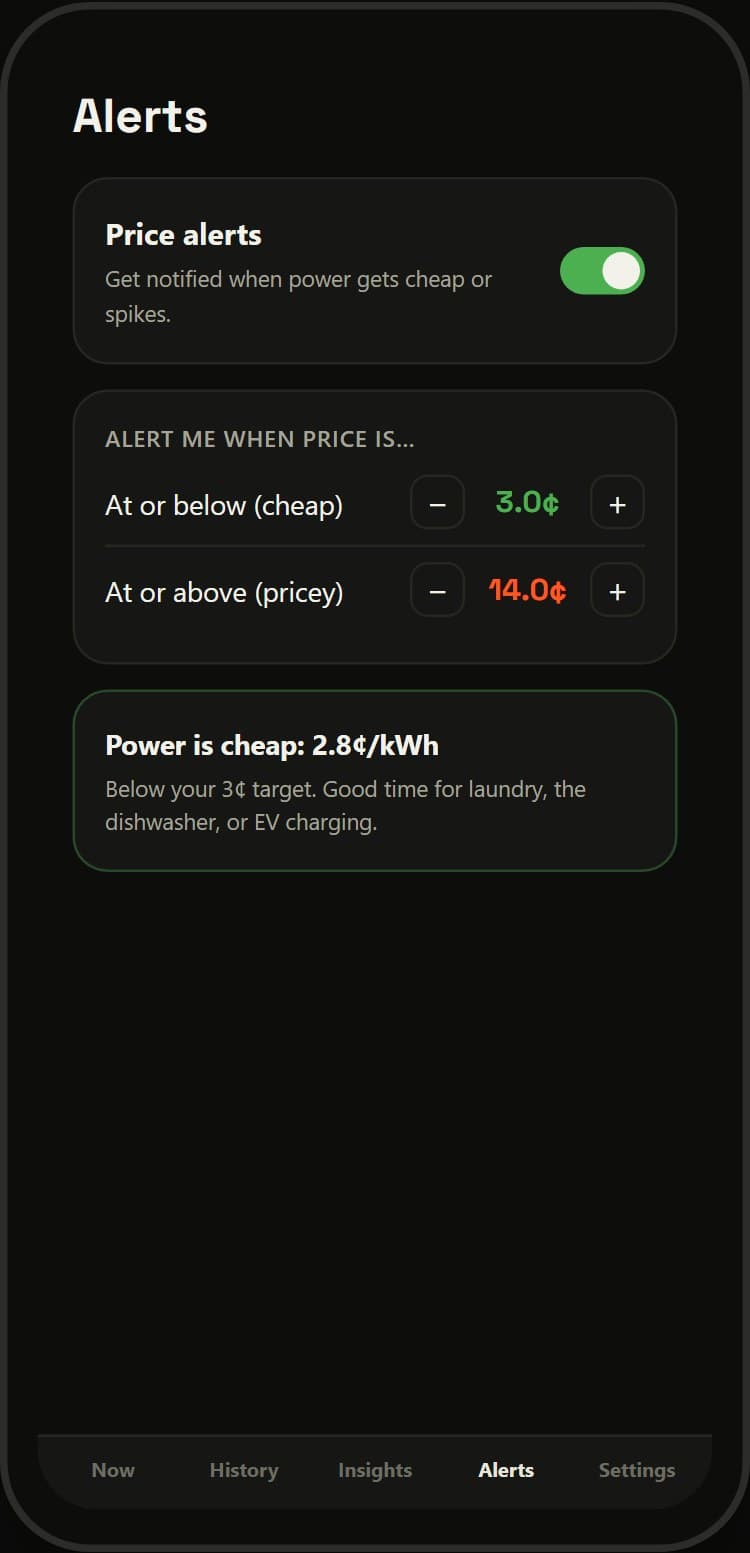
Alerts
Price alerts
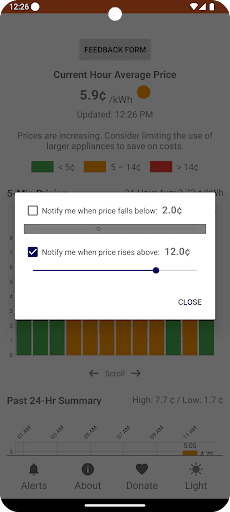
Set a floor and a ceiling, and get notified when power drops below it or spikes above it.
Tomorrow’s prices
For Illinois hourly pricing, tomorrow’s hourly curve each evening and the cheapest 3-hour window to plan around.
Cost estimator
What an EV charge, a dryer load or an hour of AC costs at the current price, compared with the day’s cheapest window.
How v2 works
One price server behind everything
In v1 every phone fetched prices on its own. In v2 a single server collects every feed, so the app and the website read from one fast, consistent source.
01
Collect
Every 5 minutes the server pulls all 47 utility and grid-operator feeds.
02
Keep
Readings are merged into daily files, so history outlasts upstream limits. NYISO deletes after about two weeks; GridPrice doesn’t.
03
Serve
A public JSON API at gridprice.app/v1 returns providers, the current price, the last 24 hours and any history range.
04
Show
The website, the live map and the app’s widgets all read from that one API.
No dependencies
The website and API run in one Node.js process built only on Node’s standard library.
Server-side fetching
Some feeds block phones and browsers. Fetching them on the server makes them work everywhere.
Self-hosted
It runs in Docker on my own server behind a Cloudflare tunnel. It began as a Cloudflare Worker.
Honest about prices
Prices are energy supply costs from public feeds. The site says plainly that a bill also includes delivery charges.
Open data
A free public API
The same data the app and website use is open to anyone: live and historical prices across all 47 providers, in one format, with no key required.
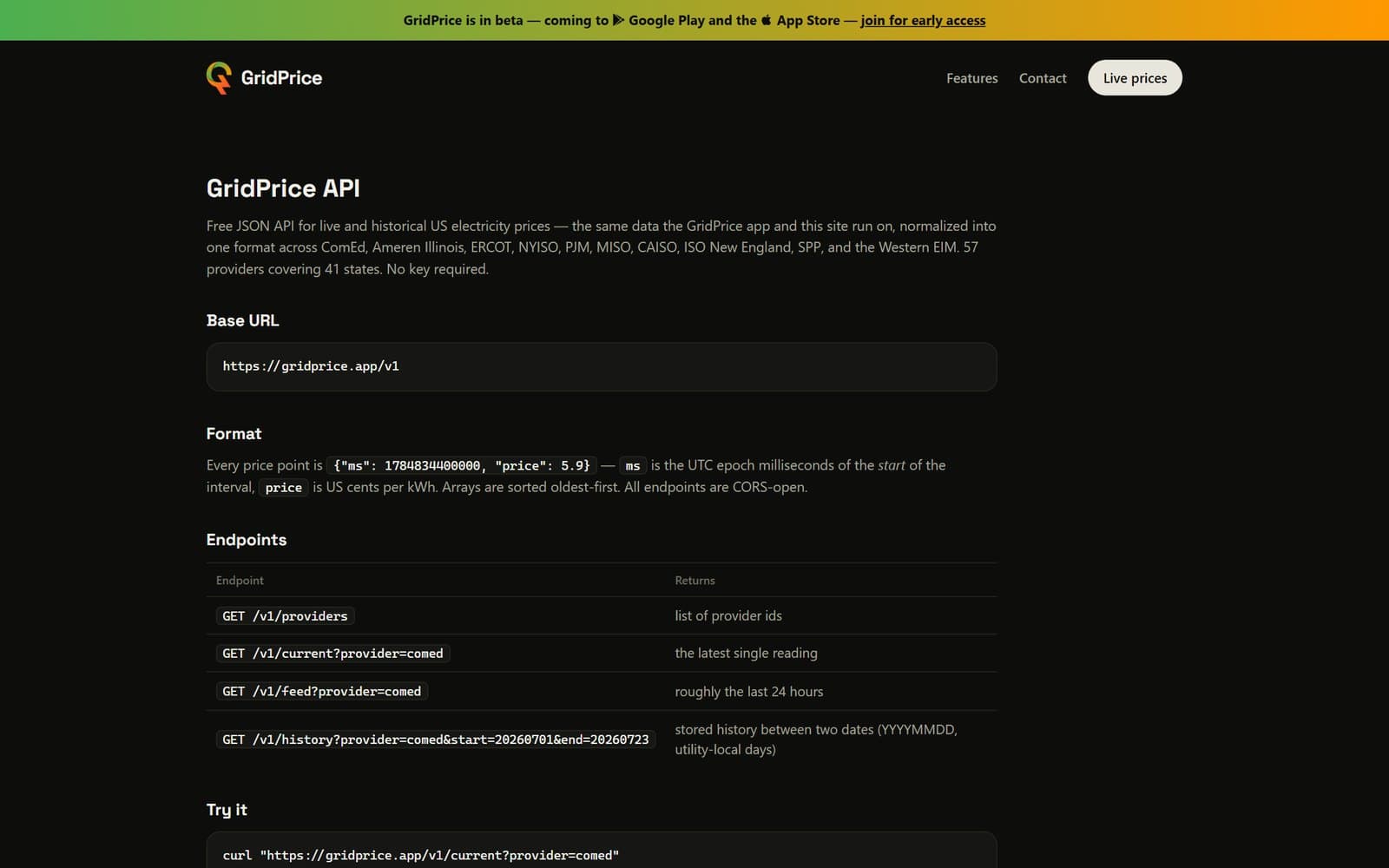
gridprice.app/api
Documented endpoints for providers, the current price, the last 24 hours and history.
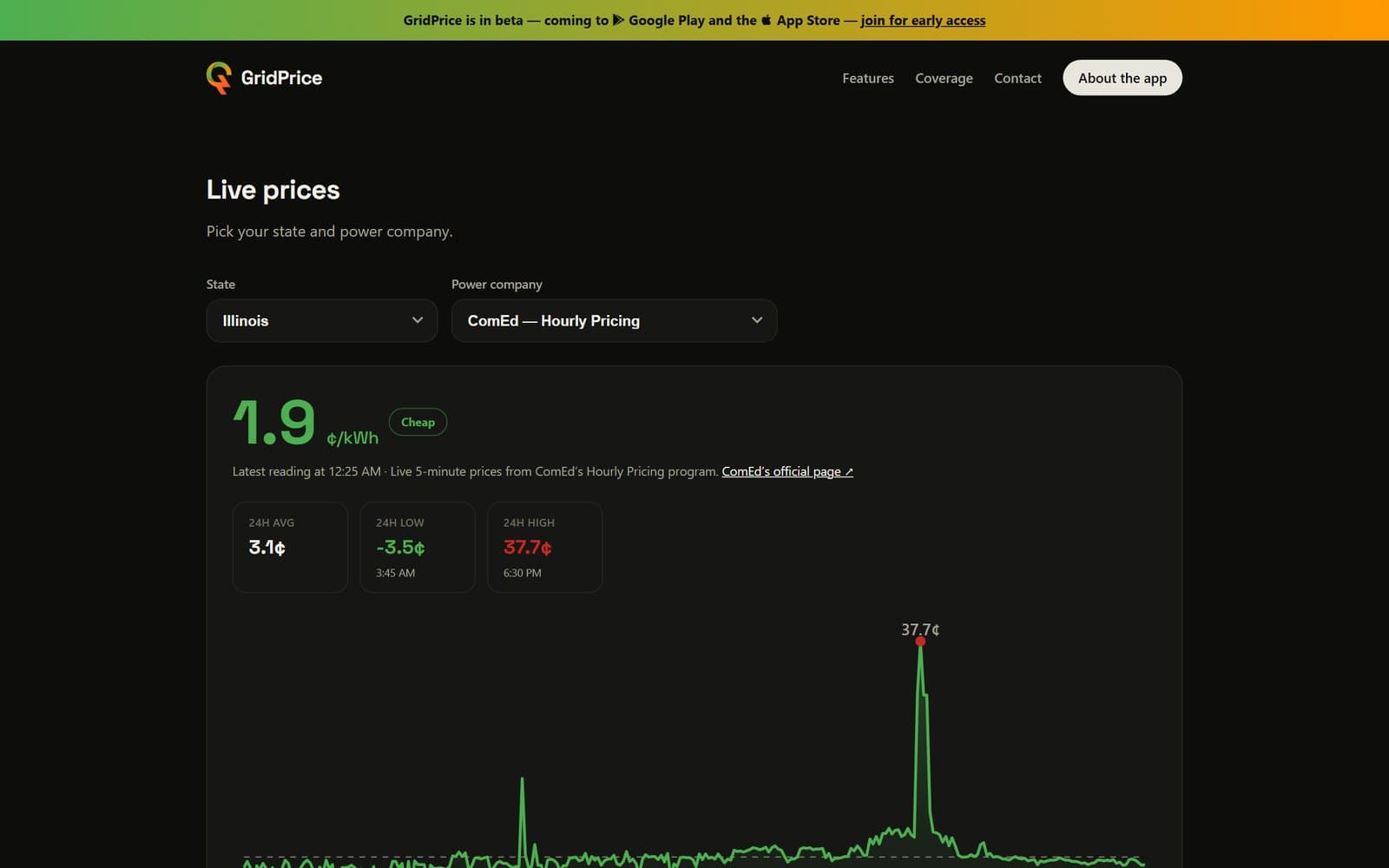
gridprice.app/live
Pick a state and power company to see the live price and today’s chart in the browser.
A real brand
A name, a domain and a mark
v2 got its own identity: a lightning-bolt G that runs from the green of cheap power to the orange of expensive power, used on the site, the app icon and the Play Store listing.
Where it started
GridPrice v1
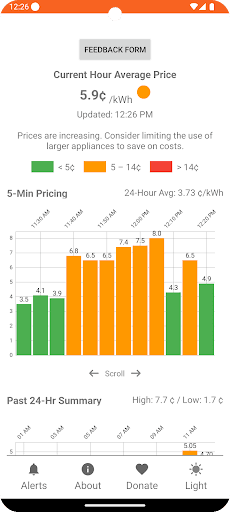
The original Android app, for ComEd’s hourly pricing program only. Built in Kotlin with an MVVM structure, it fetched prices with Retrofit, ran background checks with WorkManager and drew its charts with MPAndroidChart. Its four screens are the seed of everything in v2.
Know the price. Time the power.
GridPrice is free, with no account and no ads. Join the beta to get the Android app before the Google Play launch, or check your live price on the web now.